
 Satellite Cell Activation
 Extended Half Life
 IGF-1 Splice Variant
 Localized Muscle Repair
 Physician-Prescribed
Targeted Muscle Repair Starts at the Satellite Cell
PEG-MGF is a PEGylated form of Mechano Growth Factor, the IGF-1 splice variant produced in muscle tissue after mechanical stress. Its extended half life allows sustained satellite cell activation for localized repair. Join the waitlist for physician supervised access.
Physician Supervised PEG-MGF Access Coming Soon
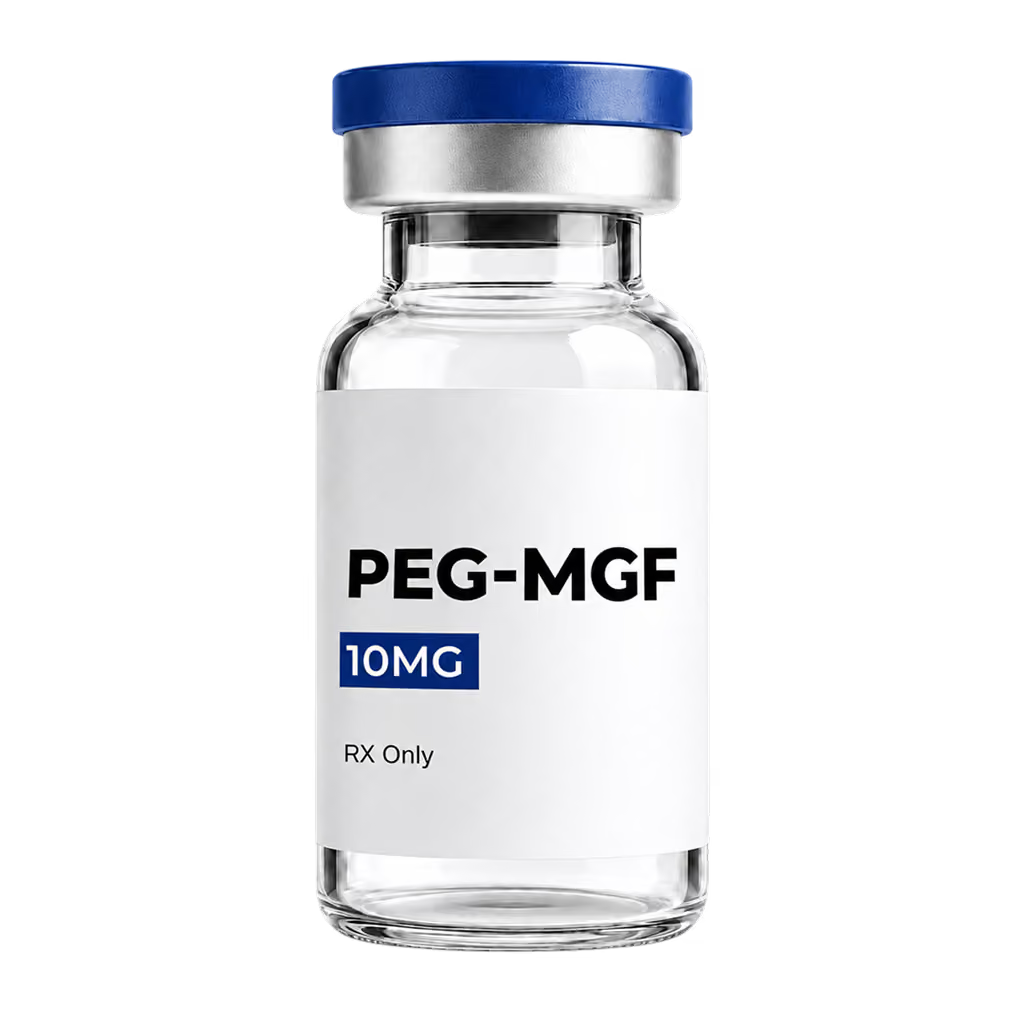
Physician Supervised PEG-MGF Access Coming Soon
We are building a physician supervised access pathway for PEG-MGF. When enrollment opens, qualified individuals will receive a medical evaluation, baseline laboratory work, and a personalized dosing protocol prepared by a licensed compounding pharmacy.

Currently in development
No Hidden Fees
Coming Soon
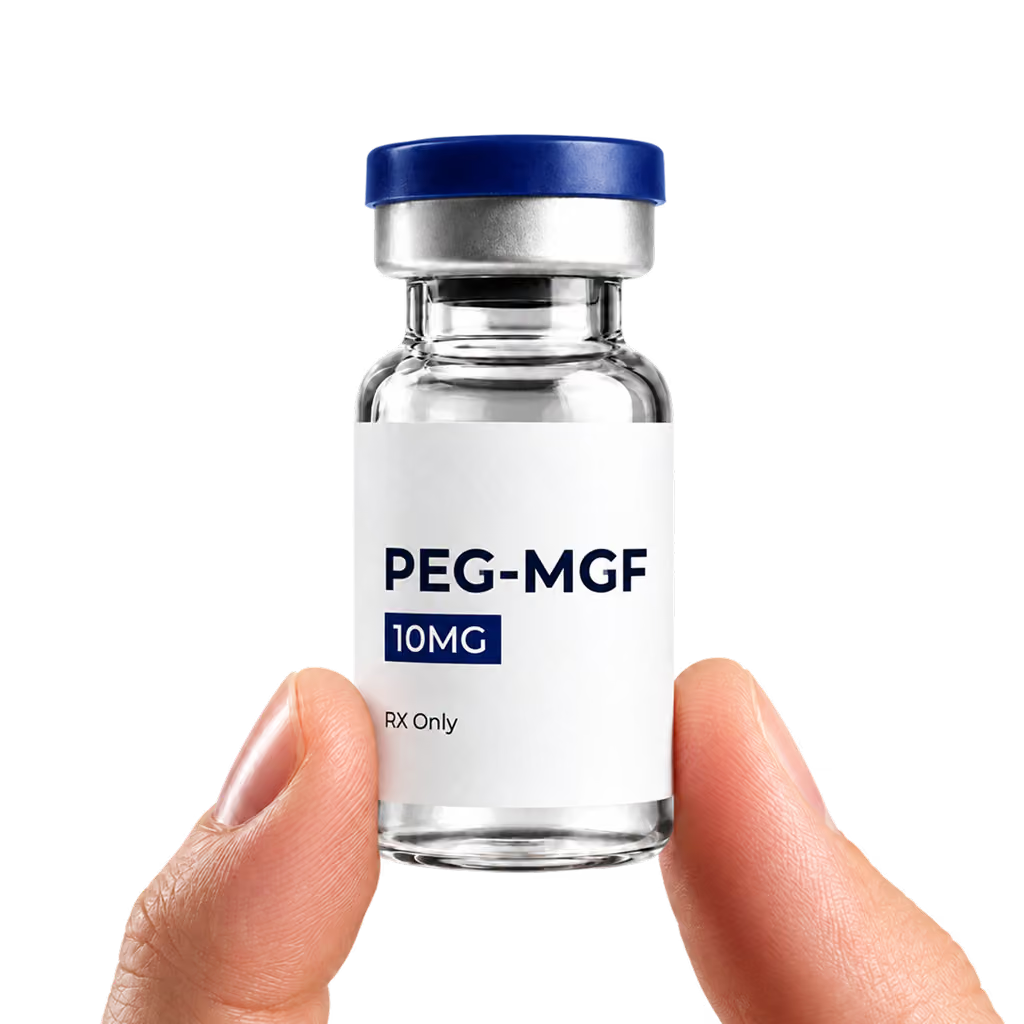
How PEG-MGF Works
- 1
Mechanical Stress Triggers MGF Expression
When muscle fibers are damaged through resistance training or injury, the IGF-1 gene is alternatively spliced to produce Mechano Growth Factor (MGF) at the site of damage. This is a natural, localized repair signal.

- 2
MGF Activates Satellite Cells
MGF binds to receptors on satellite cells, the resident stem cells in muscle tissue, triggering their proliferation and differentiation. These activated satellite cells donate nuclei to damaged muscle fibers, enabling repair and hypertrophy.
- 3
PEGylation Extends the Repair Window
Natural MGF degrades within minutes. PEG-MGF's polyethylene glycol coating protects the molecule from rapid enzymatic breakdown, extending the satellite cell activation window from minutes to hours.
What PEG-MGF Actually Is
The Growth Factor Your Muscles Already Make
The problem with natural MGF is its extremely short half life: it degrades within minutes of release, limiting its window of biological activity. PEG-MGF addresses this by attaching a polyethylene glycol (PEG) polymer to the MGF molecule, extending its half life from minutes to several hours and allowing sustained satellite cell activation at the target tissue.
Local Repair vs Systemic Growth
PEG-MGF, by contrast, is designed for localized action. In its natural form, MGF is produced at the site of muscle damage and acts on nearby satellite cells before degrading. The PEGylated form extends this local activity window without converting the peptide into a systemic agent. This makes PEG-MGF particularly relevant for individuals seeking targeted recovery support rather than whole body anabolic stimulation. For those interested in systemic IGF-1 activity, our partner site igf1lr3.com covers IGF-1 LR3 in detail.
What the Published Research Shows
Research Area 1: Satellite Cell Biology and MGF
Mechano Growth Factor was first characterized as a splice variant of IGF-1 that is expressed in response to mechanical overload of skeletal muscle. Published research has demonstrated that MGF activates satellite cells, promoting their proliferation and differentiation into mature myonuclei. This mechanism is distinct from the systemic anabolic effects of circulating IGF-1, as MGF acts locally at the site of tissue damage.Research Area 2: PEGylation and Peptide Pharmacokinetics
PEGylation is a well-established pharmaceutical strategy for extending the biological half life of therapeutic peptides and proteins. The attachment of polyethylene glycol chains increases molecular size, reduces renal clearance, and protects against proteolytic degradation. PEGylated formulations are used in FDA approved therapeutics including pegfilgrastim (Neulasta) and peginterferon alfa, validating the technology platform even though PEG-MGF itself has not received regulatory approval.Research Area 3: PEG-MGF in Preclinical Models
Preclinical studies have explored PEG-MGF in animal models of muscle injury and cardiac repair. These studies have demonstrated enhanced satellite cell activation and improved tissue repair outcomes compared to unmodified MGF. However, controlled human clinical trials of PEG-MGF are extremely limited, and the translation of preclinical findings to human applications remains unconfirmed.
Source References
- 1. Goldspink G. "Mechanical signals, IGF-I gene splicing, and muscle adaptation." Physiology. 2005;20:232 to 238. https://pubmed.ncbi.nlm.nih.gov/16024671/
- 2. Hill M, Goldspink G. "Expression and splicing of the insulin-like growth factor gene in rodent muscle is associated with muscle satellite (stem) cell activation following local tissue damage." Journal of Physiology. 2003;549(Pt 2):409 to 418. https://pubmed.ncbi.nlm.nih.gov/12692175/
- 3. Yang SY, Goldspink G. "Different roles of the IGF-I Ec peptide (MGF) and mature IGF-I in myoblast proliferation and differentiation." FEBS Letters. 2002;522(1 to 3):156 to 160. https://pubmed.ncbi.nlm.nih.gov/12095637/

Next-generation Growth Factor Peptides
PEG-MGF offers targeted growth factor therapy by activating satellite cells directly at muscle repair sites, overcoming the limitations of natural MGF with PEGylation for sustained activity.
Join WaitlistNext-generation Growth Factor Peptides
PEG-MGF offers targeted growth factor therapy by activating satellite cells directly at muscle repair sites, overcoming the limitations of natural MGF with PEGylation for sustained activity.
Join WaitlistWhat to expect?
- Step 1Complete a short online health assessment
- Step 2A licensed provider reviews your health history
- Step 3If a prescription is right for you, our partner pharmacy prepares and ships it
- Step 4Ongoing follow-up with your care team

PEG-MGF is an investigational compound that has not been approved by the FDA for any medical indication. The information on this page is for educational purposes only and should not be interpreted as medical advice. Consult a qualified physician before making any decisions about peptide therapy.
PEG-MGF Therapy
Pricing will be announced at launch.
 No hidden fees
 Personalized plans
 On-demand medical support
 Free expedited shipping

Recovery is not passive. It is an active, targeted, physician guided process.
Every protocol on pegmgf.com begins with a physician evaluation and ends with ongoing clinical monitoring. We believe growth factor therapy should be grounded in published science, supervised by licensed physicians, and tailored to the individual. PEG-MGF represents the next step in targeted recovery, and we are building the access pathway to match that standard.

What We Are Building
- Join Waitlist
Medical Evaluation
Every protocol begins with a physician evaluation that reviews your health history, current medications, training background, and recovery goals to determine whether PEG-MGF is appropriate.
- Join Waitlist
Baseline Laboratory Work
Your physician orders baseline labs including IGF-1 levels, metabolic panel, and any compound-specific markers to establish a pre-treatment reference point for monitoring.
- Join Waitlist
Compounding Pharmacy Fulfillment
Your PEG-MGF is prepared by a licensed compounding pharmacy operating under USP standards. Every batch undergoes identity and potency testing before dispensing.
- Join Waitlist
Ongoing Monitoring
Your physician monitors your response, adjusts dosing based on lab results and clinical feedback, and screens for any adverse effects throughout the protocol duration.
Frequently Asked Questions
What is PEG-MGF?
PEG-MGF (PEGylated Mechano Growth Factor) is a synthetic, PEGylated form of Mechano Growth Factor, a splice variant of IGF-1 that is naturally produced in muscle tissue after mechanical stress such as resistance training or injury. PEGylation extends its biological half life from minutes to hours, allowing sustained satellite cell activation for localized muscle repair.
How does PEG-MGF work?
PEG-MGF activates satellite cells, the resident stem cells in muscle tissue, by binding to receptors at the site of muscle damage. These activated satellite cells proliferate and differentiate, donating nuclei to damaged muscle fibers to support repair and growth. The PEG coating protects the molecule from rapid degradation, extending the window of biological activity.
What is the difference between PEG-MGF and IGF-1 LR3?
PEG-MGF acts locally at the site of muscle damage, targeting satellite cells for tissue specific repair. IGF-1 LR3 is a systemically active IGF-1 analog that binds to receptors throughout the body, producing broader anabolic effects. The key distinction is localized versus systemic action.
What are the side effects of PEG-MGF?
Reported side effects include injection site soreness, mild nausea, and temporary blood sugar fluctuations. Because human clinical trial data is very limited, the full side effect profile of PEG-MGF is not comprehensively characterized. All use should occur under physician supervision with appropriate monitoring.
How is PEG-MGF administered?
PEG-MGF is administered via subcutaneous injection. Dosing protocols are individualized by the supervising physician based on the patient's goals, body composition, and clinical response. The extended half life of PEG-MGF allows less frequent dosing compared to non-PEGylated MGF.
Can PEG-MGF be combined with other peptides?
PEG-MGF is mechanistically complementary to growth hormone secretagogues (such as GHRP-6 or CJC-1295) because it does not suppress endogenous growth hormone production. However, combination protocols should only be designed and monitored by a licensed physician.
How long does it take to see results from PEG-MGF?
Response timelines vary by individual. Published preclinical data suggests satellite cell activation begins within hours of administration. Noticeable recovery improvements may take 4 to 8 weeks of consistent use under physician supervision. Individual results depend on training, nutrition, and baseline health status.
Is PEG-MGF the same as HGH?
No. PEG-MGF is an IGF-1 splice variant that targets satellite cells locally. HGH (human growth hormone) is a recombinant hormone that acts systemically by binding to GH receptors throughout the body. They have different mechanisms, different targets, and different side effect profiles.
Is PEG-MGF FDA approved
No. PEG-MGF has not been approved by the FDA for any medical indication. It is an investigational peptide with limited published human clinical data. PEGylation technology is validated in FDA approved products (e.g., pegfilgrastim), but the specific PEG-MGF compound has not undergone formal regulatory review.
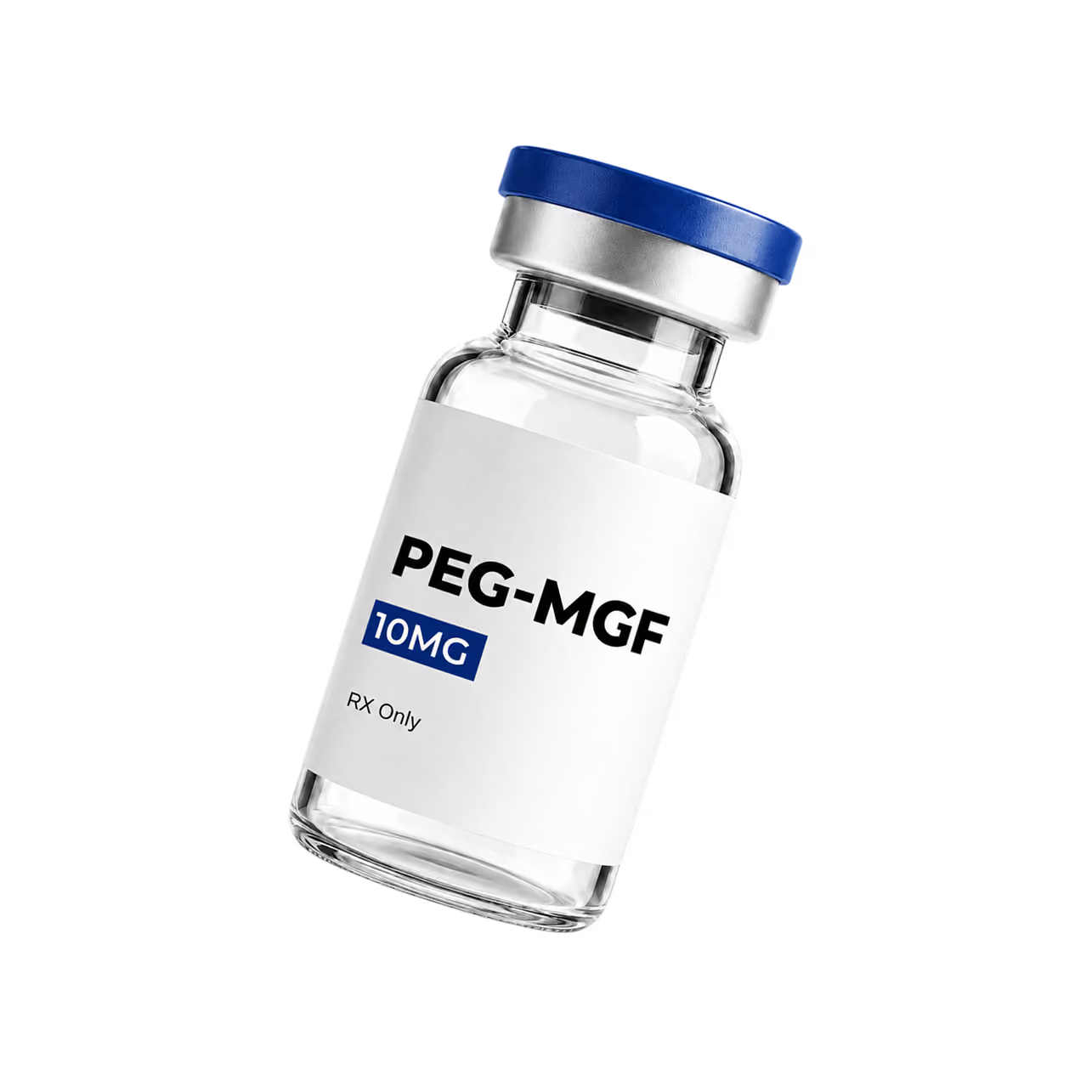
All your PEG-MGF questions answered
Discover everything you need to know about PEG-MGF, including how it supports muscle growth and recovery pathways, its potential effects on muscle development and repair, and how it compares to other growth factor peptides.